
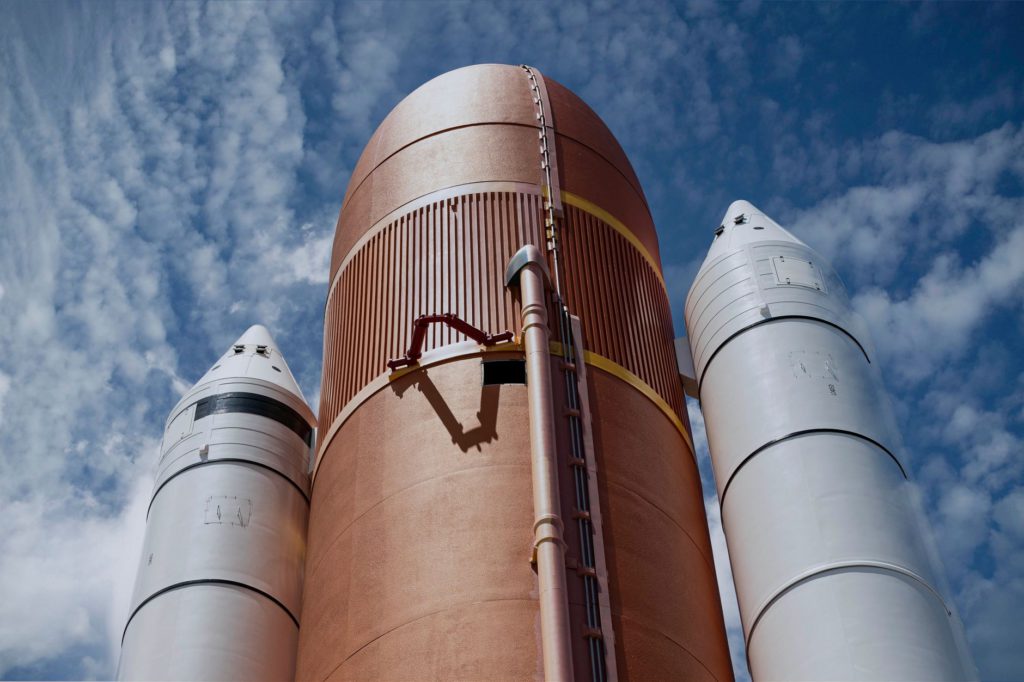
Japan spacecraft mission is set to launch, focusing on gathering samples from a Martian moon, which could provide significant insights into our solar system.
Overview of Japan’s Spacecraft Mission
Japan’s spacecraft mission aims to explore the Martian moon Phobos, marking a significant advancement in space exploration technology. The mission, known as Martian Moons eXploration (MMX), is designed to collect samples from the surface of Phobos and return them to Earth for analysis.
This ambitious project demonstrates Japan’s commitment to utilizing the best proven technology for exploration, building on its successful history of space missions.
Key objectives of the Japan spacecraft mission include:
- Investigating the origin and evolution of Phobos.
- Studying the surface composition and structure.
- Preparing for future human exploration of Mars.
By gathering samples, scientists hope to unlock secrets about the Martian system and the potential for life beyond Earth.
What to Expect from the Martian Moon Samples
The upcoming Japan spacecraft mission aims to provide unprecedented insights into the Martian moons, particularly Phobos. As scientists prepare for the sample collection, several key expectations have emerged.
- Sample Diversity: The mission is anticipated to gather a variety of materials, including regolith and potential organic compounds.
- Geological History: Analysis of the samples will help decipher the geological history of Phobos and its relationship with Mars.
- Astrobiology Potential: Investigating the samples may offer clues about the origins of life and the conditions on early Mars.
- Technological Innovation: The mission showcases Japan’s advanced technology for space exploration, setting a benchmark for future missions.
Overall, the Japan spacecraft mission holds the promise of revealing critical information about our neighboring planet and its moons.
Japan’s Technological Advancements in Space
Japan has made significant strides in its technological advancements in space, especially with its upcoming spacecraft mission aimed at collecting samples from a Martian moon. This initiative highlights Japan’s commitment to exploring the cosmos using best proven technology.
Key features of Japan’s spacecraft mission include:
- Innovative propulsion systems: Utilizing advanced rocket technology to ensure efficient travel across vast distances.
- Robust landing mechanisms: Designed to withstand the harsh conditions of space and facilitate safe landings on extraterrestrial surfaces.
- Cutting-edge sample collection tools: Equipped to gather and preserve samples for detailed analysis back on Earth.
As Japan continues to push the boundaries of space exploration, this mission serves as a testament to its leadership in aerospace technology.
The Importance of Sample Collection from Mars
The Japan spacecraft mission aims to revolutionize our understanding of Mars and its moons through meticulous sample collection. This initiative is critical for several reasons:
- Scientific Insight: Analyzing samples from a Martian moon could unlock secrets about the planet’s history and its potential for life.
- Technological Validation: The mission will demonstrate Japan’s advanced technology in space exploration, showcasing its capabilities on an international stage.
- Future Missions: Successful sample collection can pave the way for future interplanetary exploration, enhancing our ability to gather data from distant celestial bodies.
- Global Collaboration: This mission fosters international partnerships in space research, emphasizing the shared goals of discovery and knowledge.
Ultimately, the Japan spacecraft mission represents a significant step forward in humanity’s quest to explore the cosmos.
Photo by john mckenna on Pexels